The Japanese particle で (de)
Learn how で (de) marks the setting, transport, tool, or language that makes an action possible.
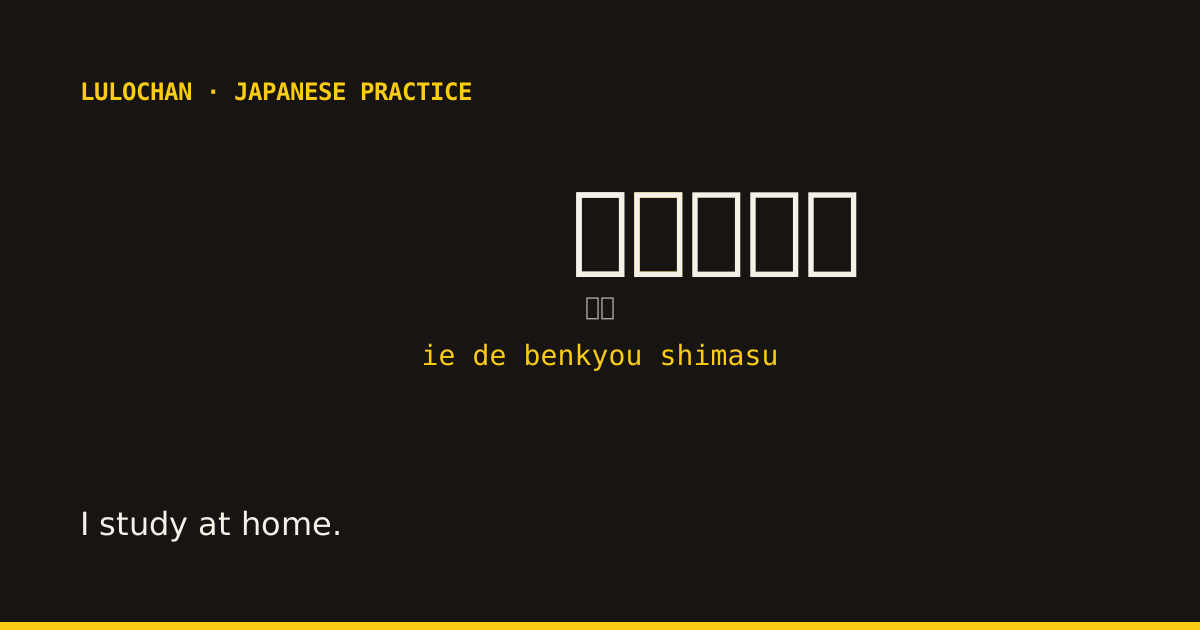
The same action changes with its context. You can study at home or in a library. You can travel on foot or by bus. You can eat with your hands or with chopsticks.
The particle で (de) marks the context that makes the action possible.
By the end of this lesson, you will be able to use で (de) to say where you do something, what transport you take, what tool you use, and what language you communicate in.
The setting of an action
The most common beginner pattern is place + で (de) + action.
家 (ie), home, is the setting. 勉強します (benkyou shimasu), study, is the action that happens there.
Choose the particle that turns home into the setting for studying:
Loading exercise…
A destination takes に (ni), not で (de)
A place can be the destination of movement or the setting of an action. The job changes, so the particle changes too.
に (ni) is an arrow ending at the library. で (de) turns the library into the stage where you study. If the arrow idea is still new, the lesson about に (ni) explains it through destinations, times, and people.
Ask “Am I moving toward this place?” to choose に (ni), or “Am I doing the action there?” to choose で (de).
A means of transport
で (de) also marks the means you use to travel.
The bus and bicycle are the means that make the movement possible.
One useful exception is 歩いて (aruite), on foot, which does not use で (de).
A tool
A tool also makes an action possible, so it follows the same model.
Do not memorize “at”, “by”, and “with” as separate translations. In every case, で (de) marks the context or resource used for the action.
The language you use
A language is another tool for communication.
The language is the means through which communication happens.
Now select the correct uses of で (de):
Loading exercise…
Design your setting
Choose one action from today and change its context three times. Where do you do it? What tool do you use? Do you need a language or a means of transport?
Once you understand で (de) as what makes an action possible, its different uses stop feeling like separate rules.
Ready to practice で (de)?
Practice simple places and actions with an AI tutor.
Practice で (de)