The Japanese particle は (wa)
Learn how は (wa) shows the topic of a simple Japanese sentence. Includes clear examples and a short practice.
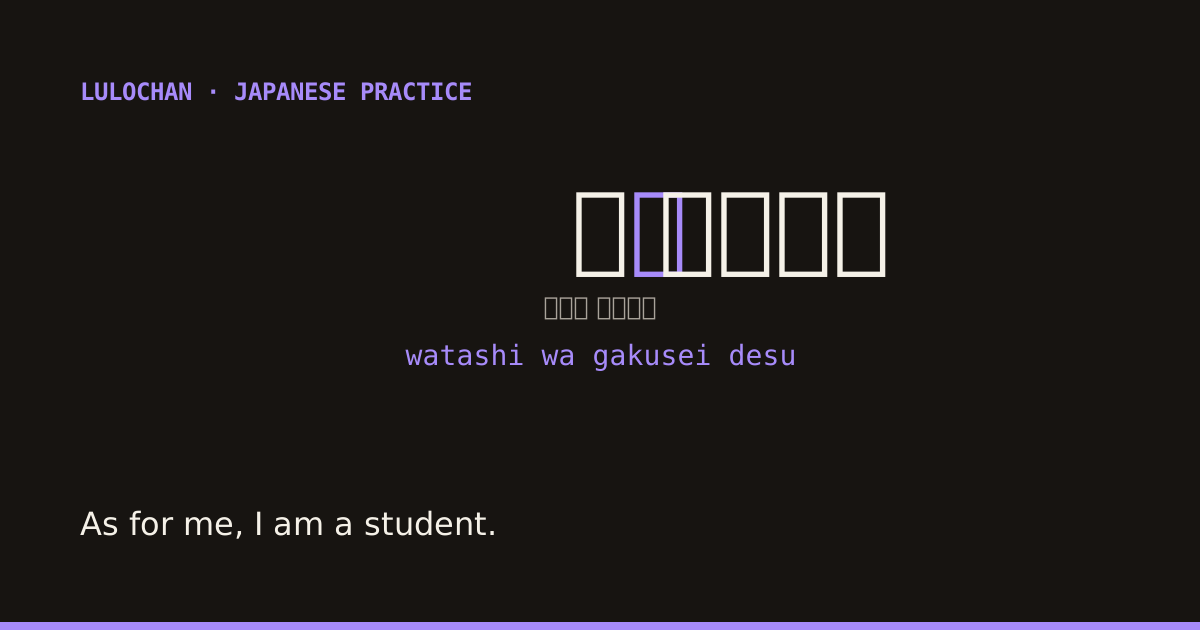
The particle は (wa) is one of the first things you learn in Japanese. The character is called は (ha), but you say wa when it is a particle.
What は (wa) does
は (wa) shows the topic of a sentence. The topic is the person or thing we are talking about.
Think of it as “as for...” or “about...”.
Loading exercise…
The rest of the sentence tells us something about that topic.
は (wa) and が (ga)
Beginners often mix up は (wa) and が (ga). For now, remember that は (wa) shows the topic.
| Particle | Role | Feel |
|---|---|---|
| は (wa) | Topic | “We are talking about X.” |
| が (ga) | Highlighted person or thing | “X is the one...” |
You do not need the complete difference today. First, learn to recognize は (wa) as a topic marker.
Three easy patterns
Name and identity
Likes
Contrast
は (wa) can also show a difference between two things. You do not need this use yet. Just look at the example:
Pronunciation
When は (wa) is a particle, you say wa.
Inside a word, it can sound like ha. For example, 花 (hana) means “flower”. In 花 (hana), は sounds like ha.
Read the examples out loud. Say は (wa) several times.
One idea to remember
は (wa) answers this question: “What are we talking about?”
If you want to talk about yourself, start with 私 (watashi) は (wa). Then add your name and です (desu). In the lesson about introducing yourself in Japanese, you can turn this pattern into a complete conversation.
Ready to practice? Open the app and try 私は…です, read as watashi wa... desu.
Ready to practice は (wa) in real conversation?
Open Lulochan and practice these patterns with an AI tutor that talks back.
Practice は (wa) with Lulochan