The Japanese particle を (o)
Learn how を (o) marks what you eat, drink, buy, watch, or listen to during a day in Japan.
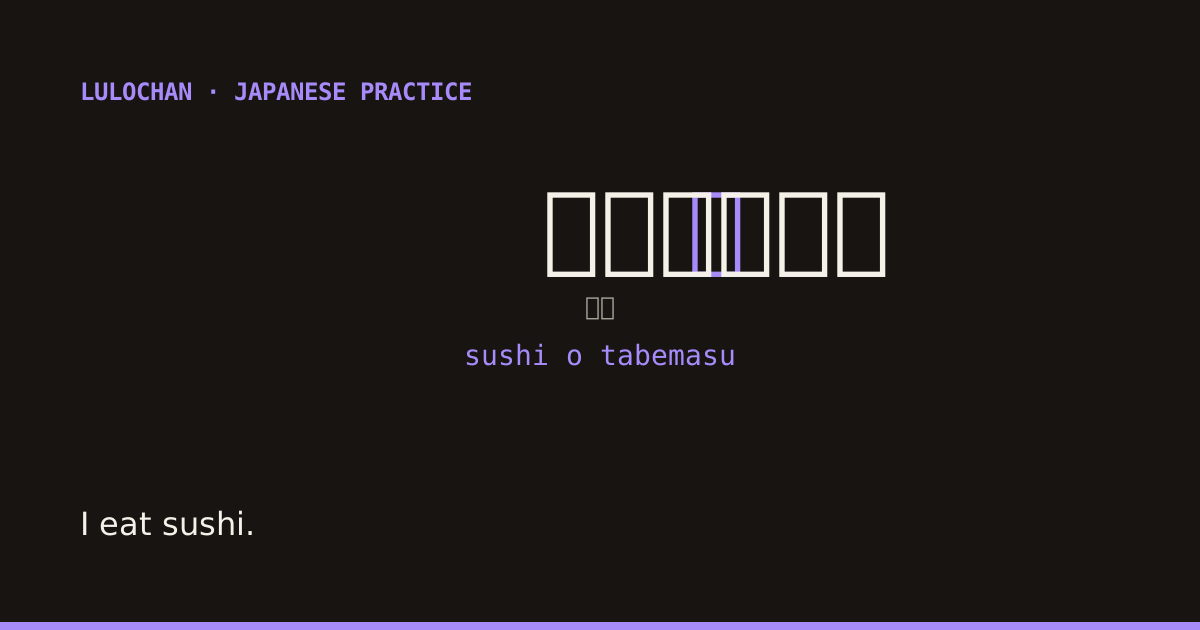
Imagine a full day in Japan. You eat breakfast, visit a market, buy a souvenir, and finish by watching a film. Whenever an action affects something directly, を (o) connects that thing to the action.
By the end of this lesson, you will be able to identify what receives an action and build sentences about what you eat, drink, buy, watch, and listen to.
The thing comes before the action
The pattern is thing + を (o) + action.
寿司 (sushi) receives the action of eating. 食べます (tabemasu) means eat.
A mental question helps you place を (o): “What do I eat?” The answer is sushi, so を (o) comes after 寿司 (sushi).
Complete the first sentence with the correct particle:
Loading exercise…
In the morning: eating and drinking
At a Japanese cafe, you drink coffee before starting the day.
飲みます (nomimasu) means drink. Ask “What do I drink?” The answer コーヒー (koohii) appears immediately before を (o).
At the market: buying
Later, you visit a market and buy a souvenir. お土産 (omiyage) means a souvenir or travel gift.
買います (kaimasu) means buy. The souvenir receives the action.
Identify what receives the action in that sentence:
Loading exercise…
In the afternoon: watching and listening
を (o) is not limited to objects you can touch. It also marks what you watch or listen to.
The film receives the action of watching. The music receives the action of listening. The logic stays the same even when the things are experiences.
The place and the thing have different jobs
One sentence can mention where an action happens and what receives it.
で (de) marks the restaurant as the place of the action. を (o) marks the ramen as what you eat. They do not compete because they answer different questions: “where?” and “what?” You can explore the first role in the lesson about で (de).
It is written を but pronounced o
The particle is written を (o) and normally sounds the same as お (o). They are different characters with different jobs.
を (o) is a particle. お (o) appears inside words and can also be a polite prefix, as in お水 (omizu), water.
You do not need to distinguish them by sound. The position in the sentence tells you when you are hearing the particle を (o).
Tell the story of your day
Think of five actions from your own day: something you eat, something you drink, something you buy, something you watch, and something you listen to. Put each thing before を (o) and finish with the action.
The question “What receives this action?” will help you find を (o) even when you do not know every word in the sentence. You can then use the pattern in a complete situation with the guide to ordering food in Japanese.
Ready to practice を (o)?
Say simple Japanese sentences with an AI tutor that talks back.
Practice を (o)